- Tel: +86 150 0312 5825
- E-mail: l.wang@sino-marble.com

Ask five Chinese stone suppliers what "Grade A" marble tile means and you may get five different answers. There is no universal, industry-wide grading standard for natural marble tile the way there is for, say, lumber. Grades are assigned by each factory, using its own judgment.
That does not make grades meaningless — but it does mean US buyers need to know what is actually behind the label. Here is a practical guide.
When a supplier talks about grade, they are really describing four things at once:
1. Color consistency. The top grade of a given marble — often called A, Select, or First Choice — has a consistent background tone with minimal tonal shift from tile to tile. Lower grades show more cloudiness, patchiness, or color drift across the lot. For white marbles like Carrara, this is usually the single biggest price driver.
2. Veining pattern. Finer, evenly distributed veining generally sits in the top grade. Heavy, abrupt, or wildly scattered veining drops a tile into a lower grade. Note: this is aesthetic, not structural — a heavily veined tile can be perfectly sound. It just will not match a uniform floor design.
3. Surface integrity. Premium grades have fewer open pits, filled naturally or with resin, and no through-cracks. Lower grades may carry visible filler, small chips along edges, or structural fissures that can open up during installation.
4. Dimensional tolerance. Higher grades are calibrated more tightly — consistent thickness (±0.5–1 mm is a reasonable target for 10–12 mm tile), square corners, and flat surfaces. Inconsistent calibration causes lippage on installation and is one of the most common complaints we hear from US installers.
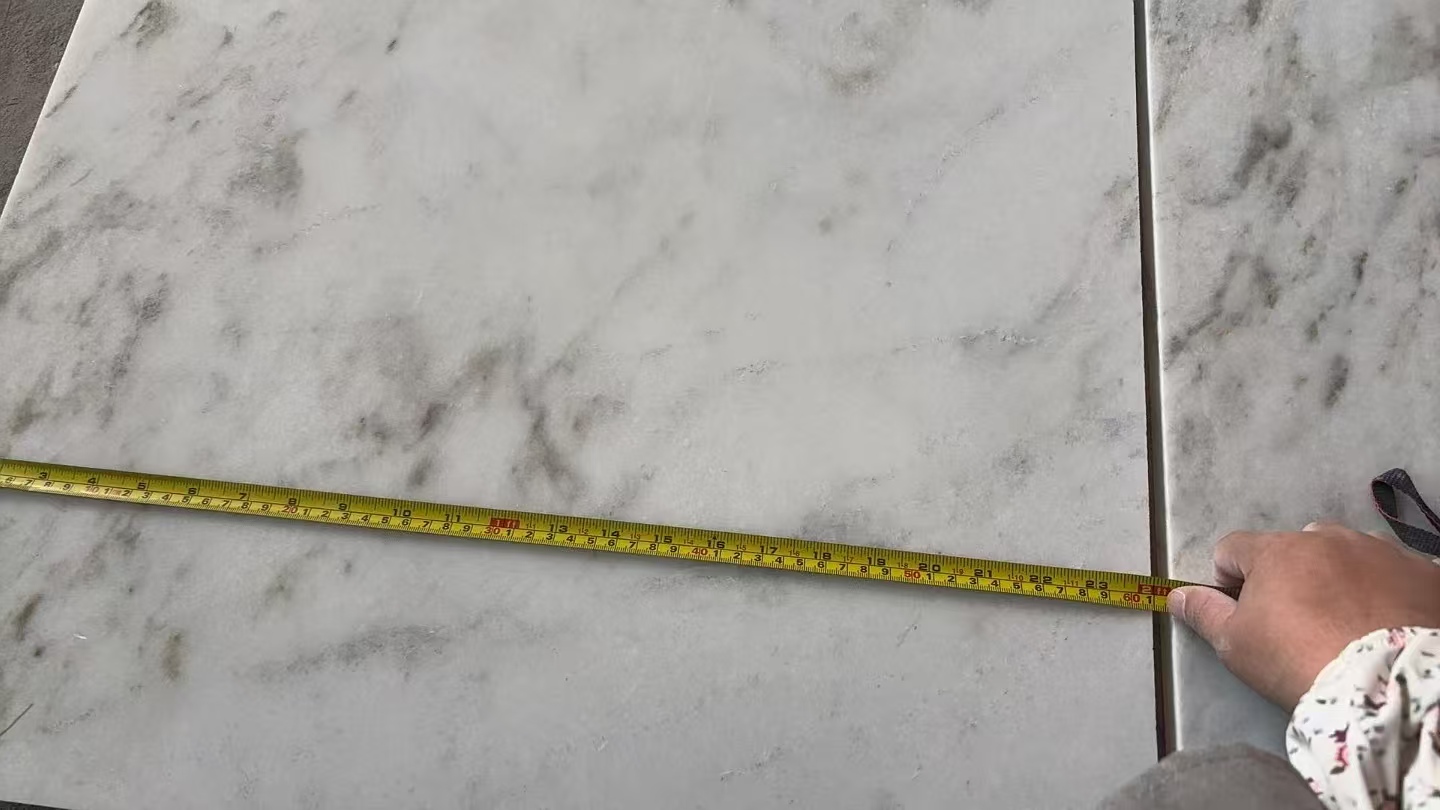
Here is the honest version: a factory's "Grade A" guarantees that the tile passed that factory's best-tier selection. It does not guarantee it matches another factory's Grade A, and it does not certify anything about the stone's inherent quality.
Two things matter more than the grade letter:
The selection criteria. Ask the supplier how they grade: what gets rejected at each level? A supplier who can describe their selection criteria in concrete terms (color range boards, rejection rate, tolerance numbers) is more trustworthy than one who just says "Grade A."
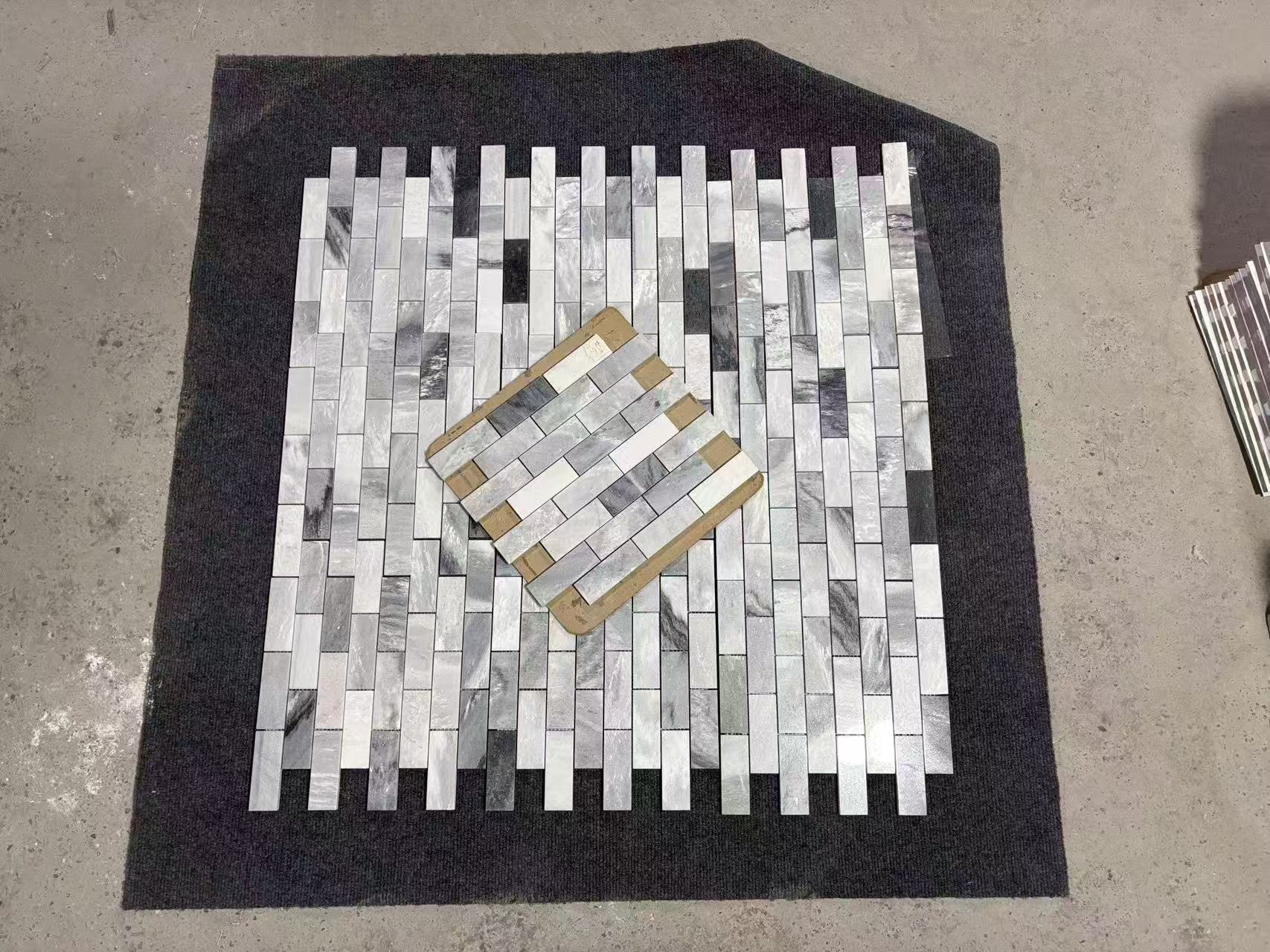
The dry lay. For orders with strict color matching, request a dry-lay inspection — tiles laid out in the order they will ship, photographed before packing. This is the single best protection against shade variation, regardless of what grade is printed on the invoice.
Watch for these when evaluating suppliers:
"Grade A" with no rejects. Every quarry block produces a spread of quality. A factory that claims 100% top grade is either blending from multiple sources or grading generously.
Price far below market for the grade claimed. If "Carrara Grade A" is priced 30% below every other quote, the grade is probably the wrong variable — the material source, the thickness, or the selection standard is different.
No sample tier matching. Always ask: is the sample from the same grade you will ship? If the sample is Select and the contract just says "marble tile," you have no recourse on shade.
Instead of arguing about grade letters, put these into your purchase specs:
Reference sample: "Shipment to match approved sample ref #___ within agreed color range."
Thickness tolerance: e.g., "10 mm ± 0.8 mm, calibrated."
Surface finish: polished (gloss level) or honed, specified numerically if possible.
Packing inspection: photo/video confirmation of dry lay before container loading.
Filler disclosure: acceptable resin fill level — natural marble almost always needs some.
These five lines do more work than any grade letter on a proforma invoice.
Grades are a starting point for conversation, not a guarantee. The suppliers worth working with are the ones who can explain their selection criteria, show you the actual range, and put shade-matching commitments in writing.
If you are evaluating marble tile from China and want a second opinion on a supplier's grade claims — or want to see what our selection standard actually looks like — send us your target specs. We will answer with photos and numbers, not adjectives.
— The Sino-Marble Team


