- Tel: +86 150 0312 5825
- E-mail: l.wang@sino-marble.com

Natural stone paving looks simple — it's just stone on the ground. But unlike indoor tile, pavers live outside year-round: they carry cars, take rain, freeze in winter, and get walked on wet. Get the thickness, the finish, or the stone wrong, and the failure shows up in the first season. Here's what to get right before you order.
The single most common paving mistake is ordering tile thickness for a ground application. Thickness is decided by load, not by looks:
Walkways and patios (foot traffic only): thinner pavers are fine.
Driveways and parking areas (vehicles): you need thicker pavers, laid on a proper compacted base. A thin paver under a car will crack — no matter how good the stone is.
Pool decks and garden paths: foot traffic, but wet conditions matter more than load (see finish below).
Before you compare prices, compare thickness. A cheaper paver is often just a thinner one.
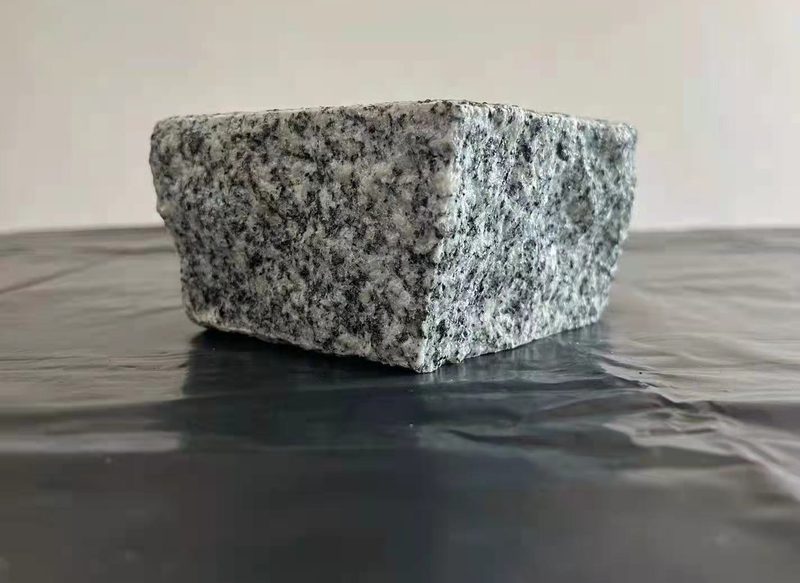
Outdoor stone gets wet. The finish decides whether it stays safe underfoot:
Flamed or bush-hammered: rough, textured surfaces with strong grip — the workhorse finishes for driveways, walkways, and pool surrounds.
Tumbled: softened edges and a worn, rustic feel. Good grip, popular for patios and garden paths.
Natural split: the stone's own cleft surface. Grip varies by stone type — ask, don't assume.
Polished or honed: beautiful, but slippery when wet. Save these for covered areas or vertical surfaces, not open paving.
If your supplier can't tell you the slip resistance of the finish you're buying, that's a red flag.
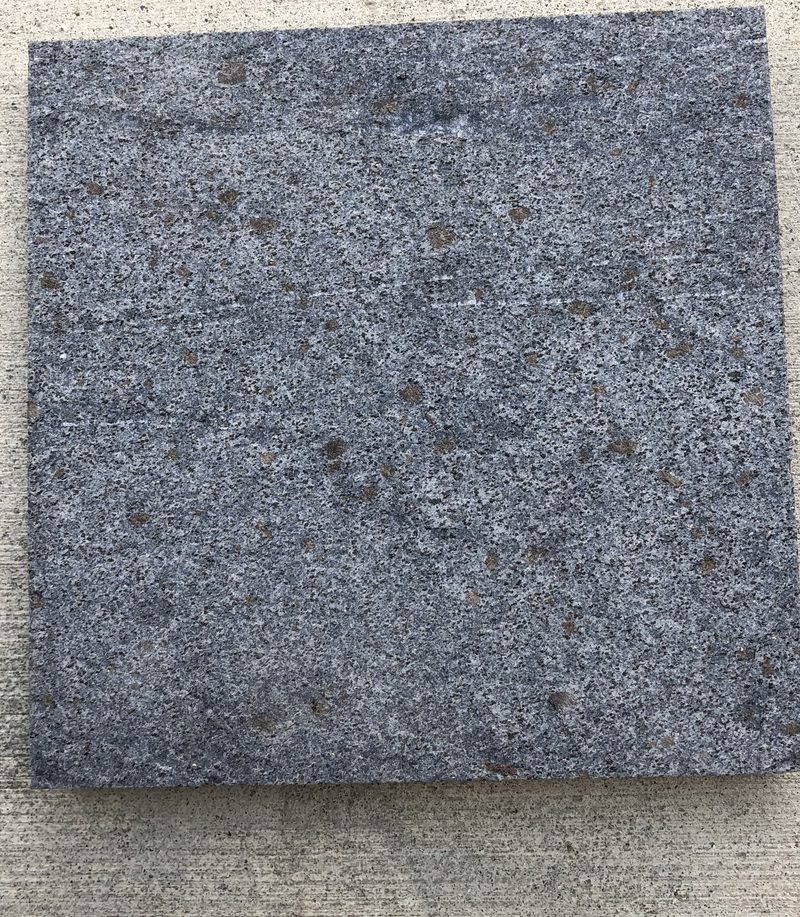
This is where many paving orders go wrong. A stone that performs perfectly in a warm climate can crack, flake, or spall after a few freeze-thaw cycles in a cold one. Water gets into the stone's pores, freezes, expands — and the surface breaks apart.
Before ordering, tell your supplier where the pavers will be installed and ask directly: is this stone suitable for freeze-thaw conditions? For cold-climate projects, ask about water absorption and whether sealing is recommended. Don't take "it's natural stone, it's fine" as an answer — suitability varies by stone type, and the question costs nothing to ask.
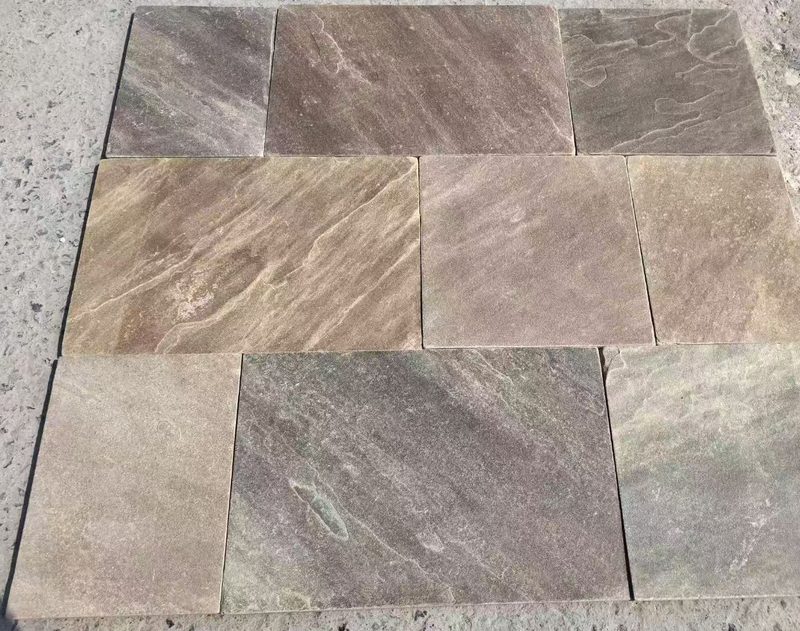
Pavers come in single sizes and in mixed-size pattern sets (such as the French Pattern, where several rectangle and square sizes lay together in a repeating combination). A pattern set looks great — but only if you know the layout before the stone arrives:
Ask for the pattern diagram and the ratio (how many pieces of each size per set, and how many square feet one set covers).
Confirm calibration: are the pavers calibrated to a consistent thickness? Uncalibrated pavers on a patio mean an uneven surface and a much harder installation.
Order 10–15% overage for cuts, breakage, and future repairs. Matching stone from a later batch is never guaranteed.
Price per square foot means nothing until you know the pattern, the thickness, and the overage.
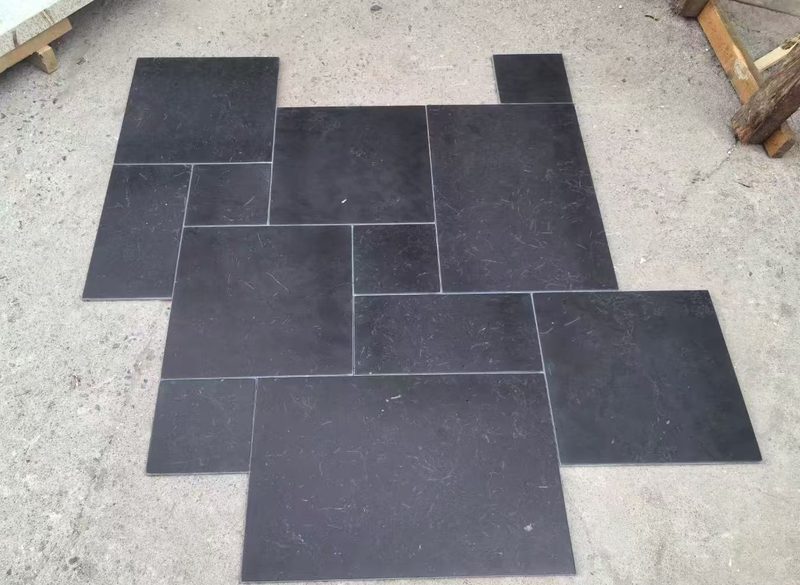
Natural stone varies. Color, veining, and texture shift between batches, and outdoors in daylight the difference is more visible than indoors. This is the nature of the product, not a quality failure.
What you can do: ask for current-batch photos of the actual pavers, ideally dry-laid outdoors in daylight — warehouse lighting hides the variation your customer will see. For large orders, a dry-lay photo of several pavers side by side shows whether the batch reads uniform across a patio or driveway.
Pavers weigh far more per square foot than tile, and that changes the logistics:
Container weight limits come first. A container of pavers can hit its weight limit before it's full — confirm with your supplier and freight forwarder how many square feet actually fit, not just how many crates.
Packing must be rigid. Pavers ship in wooden crates, not loose. Ask for a photo of the packed crates and a piece count per crate so you can verify on arrival.
Check the base, not just the stone. Even the best paver fails on a bad base. Make sure your installer compacts and levels properly — most "paver problems" are base problems.
That's the short version. Paving rewards buyers who check thickness, finish, climate suitability, and the batch — and punishes everyone who orders on the catalog photo and the price per square foot alone.
If you're planning a paving order and want a second pair of eyes on a quote or a batch photo, send it over. We look at this stone every day.
— The Sino-Marble Team


