- Tel: +86 150 0312 5825
- E-mail: l.wang@sino-marble.com


Walk into any showroom and you'll see two kinds of "stone": natural stone, cut from the earth, and engineered stone — porcelain, quartz, and sintered slabs made in a factory. Both claim the same jobs: floors, walls, counters. They don't perform the same way. Here's an honest comparison, so you can pick the right one for your project instead of the one with the better sample.
Engineered stone is manufactured, not quarried. The main types:
Porcelain tiles and slabs: clay fired at high temperature, with the pattern printed on the surface. Very hard, very consistent.
Quartz surfaces: crushed quartz bound with resin, cast into slabs. Consistent color, no sealing needed in most cases.
Sintered stone: mineral powders fused under extreme heat and pressure. Thin, large-format, and highly resistant to heat and stains.
None of these are "fake" in a bad sense — they are real products with real advantages. The question is not which is better in general, but which fits your specific job.
This is the biggest difference, and it decides most projects:
Natural stone varies. Every piece is different — veining, tone, and texture shift from slab to slab and lot to lot. That variation is the appeal: no two floors look alike, and a bookmatched feature wall is genuinely one of a kind.
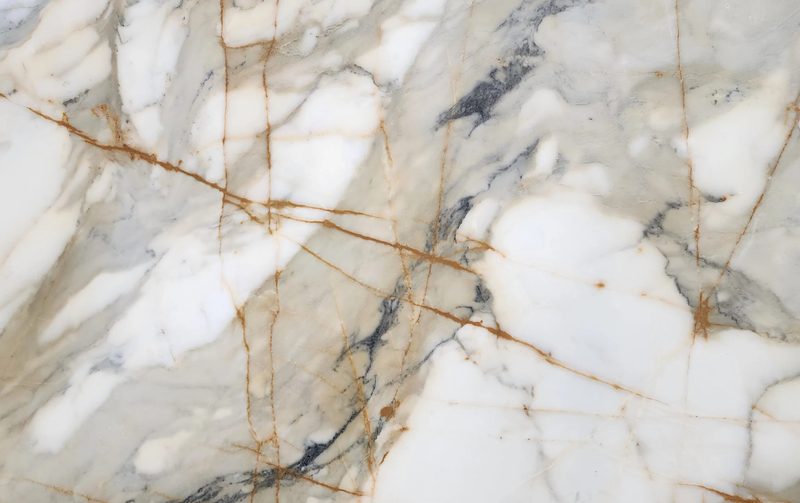
Engineered stone repeats. The pattern is printed or cast, so every piece looks nearly identical. That consistency is an advantage for large commercial floors and for buyers who want a predictable look — but it also means a sharp eye can spot the repeating pattern across a large surface.
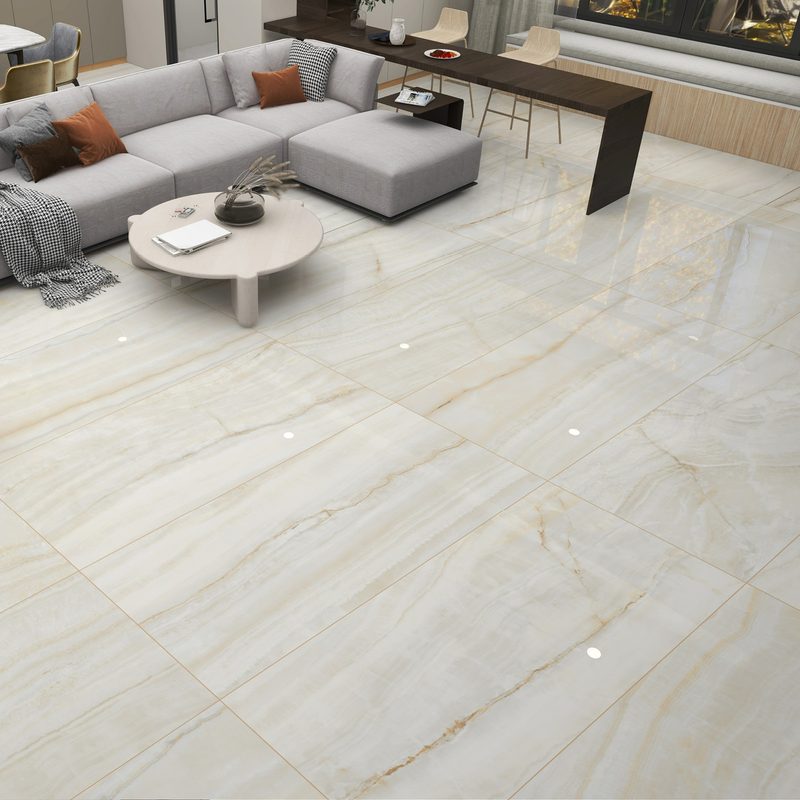
If you want character and uniqueness, natural stone wins. If you want every tile to match the sample exactly, engineered stone wins.
There is no single winner here, because "natural stone" covers everything from soft marble to hard granite:
Scratches: porcelain and sintered stone resist scratches well. Marble scratches more easily; granite holds up better. Quartz resists scratches but can be damaged by heat — don't put a hot pan directly on it.
Chips: engineered slabs can chip at the edges, and a chip in a printed surface shows the body color underneath, which rarely matches. A chip in natural stone shows more stone.
Heat: sintered stone and porcelain handle heat well. Quartz does not — resin and high heat don't mix.
Outdoors: natural stone and porcelain both work outdoors if the right type is chosen; quartz is generally not recommended for outdoor use, as UV and temperature swings can affect the resin.
Don't compare "natural vs. engineered" in the abstract. Compare the specific stone against the specific engineered product for your specific location.
Natural stone needs sealing. Most types are porous to some degree. Seal after installation and reseal on schedule — every 1–3 years indoors, more often outdoors and in wet areas. Skip this and stains follow.
Engineered stone mostly doesn't. Porcelain and sintered stone need little to no sealing. Quartz generally needs none. Daily cleaning is simpler, and acids that etch marble won't etch porcelain.
If low maintenance is your top priority, engineered stone has a real advantage. If you're willing to seal on schedule, natural stone's maintenance is simple, just not zero.
Engineered stone prices are predictable. Factory production means consistent pricing, and large formats can reduce installation time.
Natural stone prices vary. Rarity, veining quality, thickness, finish, and batch all move the price. A rare, heavily veined slab costs far more than a common one — and two quotes for "white marble" can describe very different stones.
Over the long term, natural stone can add value to a property in a way engineered surfaces rarely do — buyers recognize real stone. But the upfront cost and the maintenance cost are both higher.
Choose natural stone if: you want a one-of-a-kind look, you're doing a feature wall or a high-end counter, you value patina and character, and you're willing to seal on schedule.
Choose engineered stone if: you want a consistent look across a large area, low maintenance is the priority, the budget is fixed, or the location is high-traffic commercial.
Mix them: many projects use both — natural stone where it shows (feature wall, entry, counter) and engineered stone where it works hard (large floors, rental units, commercial kitchens).
There is no wrong answer, only a wrong match. The most expensive mistake is picking a material for its sample and discovering its maintenance, heat, or outdoor limits after installation.
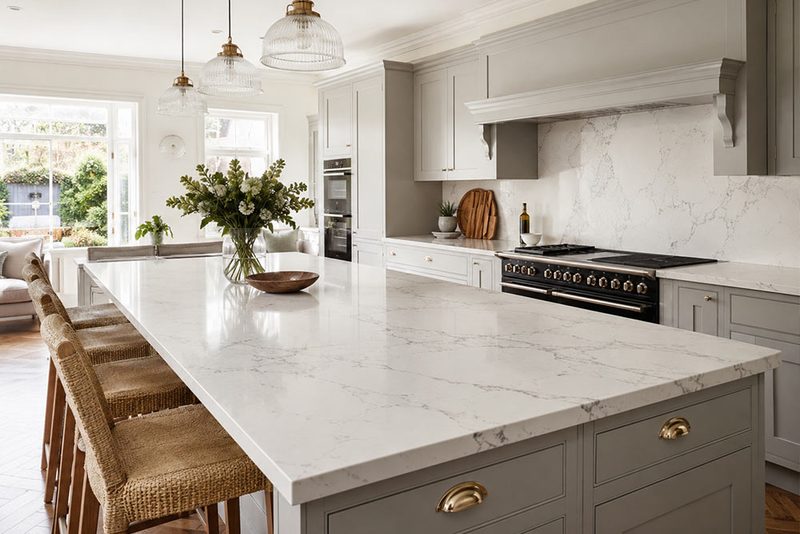
That's the short version. Natural stone gives you character and uniqueness at the cost of maintenance and variation. Engineered stone gives you consistency and easy care at the cost of that one-of-a-kind quality. Pick by the job, not by the showroom sample.
If you're deciding between the two for a project and want a second pair of eyes on a quote or a sample, send it over. We look at this stone every day.
— The Sino-Marble Team


