- Tel: +86 150 0312 5825
- E-mail: l.wang@sino-marble.com

A marble bathroom looks effortless in a photo. In real life it is a wet room first and a showpiece second. Every surface gets wet, gets steamed, and gets wiped, day after day. The buyers who love their marble bathroom years later are the ones who chose the right finish for the floor, sealed everything properly, and picked grout for water instead of for looks.
The floor and the walls play by different rules. Get those two right and the rest is detail.
The shower floor is the one place in the house where a fall is a real risk, so grip comes before looks. Polished marble is beautiful, but it is slippery when wet. On a shower floor, use a honed finish, or a small mosaic, or both.
Small pieces grip better than large ones. A mosaic sheet, most often 12x12, has far more grout lines than a large tile, and every grout line is a small edge for a bare foot to hold. That is why so many marble showers use mosaic or pebble on the floor and large tile on the walls. The floor does the gripping. The walls do the showing off.
The floor also has to drain. Water must run to the drain and away, not sit in a low spot. That is the installer's job, but it is worth asking about before the tile goes down. A floor that holds a puddle will stain, grow mold in the grout, and stay slippery long after the shower is off.
On the walls, the logic flips. Large marble tile, 12x12 or 12x24, is the better choice. Fewer pieces mean fewer grout lines, and fewer grout lines mean fewer places for water and soap to sit. A large piece of veined marble on a shower wall is also the look most buyers are after in the first place.
A polished finish works on the walls. Nobody walks on a wall, so slipperiness does not matter there, and polished marble wipes clean with one pass. A honed wall hides water spots better and looks softer, so it is a matter of taste, not safety. Either finish works, as long as it is sealed.
Keep the same batch for the whole bathroom. Stone varies from batch to batch, and in a small, bright room a difference between two boxes is easy to see. Order the floor, the walls, and the overage from one batch, and ask for a dry lay-out photo before shipment.
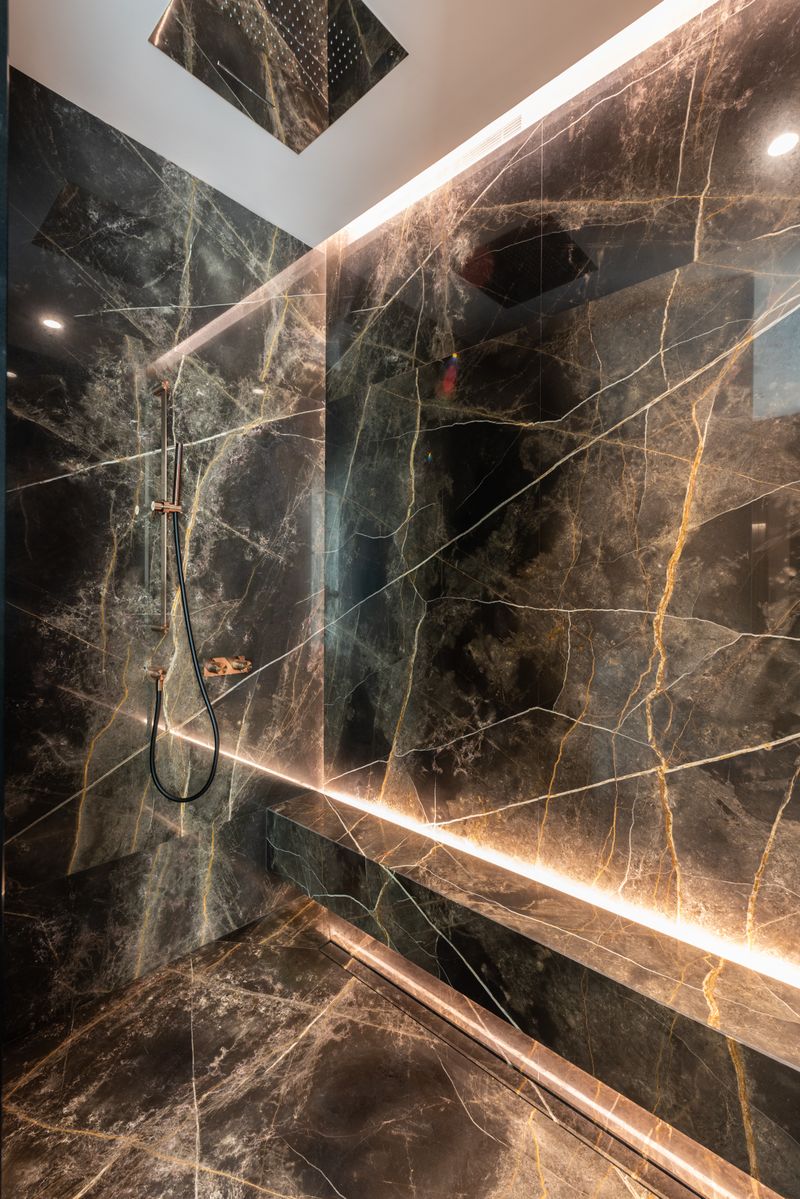
Marble is a calcitic stone, so acids can etch it and water can stain it if it is left unsealed. A bathroom is the wettest room in the house, so sealing is not optional here. It is the whole job.
Use a penetrating sealer on the stone and on the grout. Wait for the grout to cure first, usually 48 to 72 hours, then seal the whole surface. Re-seal when water stops beading on the stone. In a shower that test takes ten seconds, and it tells you everything. If the water soaks in and darkens the stone instead of beading up, the sealer has worn off and it is time to reseal.
The floor needs resealing more often than the walls, because it takes the most water and the most foot traffic. Check the shower floor every few months. A floor that is sealed on schedule stays pale and clean. One that is not will darken in the wettest spots first, and that darkening is hard to reverse.
Grout in a bathroom does more work than grout anywhere else in the house, so pick it for water first and color second.
For narrow joints, under about 3mm, use unsanded grout. Sanded grout can scratch a polished stone face, and in a bathroom the stone is at eye level and in bright light, so a scratch shows. For wider joints, sanded grout is the right choice. In the shower itself, where water hits hardest, epoxy grout is worth asking about. It costs more, but it does not stain the way cement grout does, and it needs no sealing.
Grout color changes the room. A grout that matches the stone keeps the surface calm and lets the veining do the talking. A contrasting grout turns every joint into a line and makes a small bathroom look busier. On a shower floor, a light grout shows dirt faster, so a mid-tone that sits close to the stone is usually the safer pick.
A sealed marble bathroom is easy to clean, as long as the cleaner is right. Use a pH neutral cleaner and a soft cloth. Wipe the shower walls down after use, or run a squeegee over them. Thirty seconds a day keeps soap film from building up, and soap film is what makes a shower look dull.
Never use an acidic cleaner on marble. Vinegar, lemon cleaners, and most bathroom descalers are acids, and acid etches calcite. An etched spot looks like a dull patch that will not wipe away, because the stone surface itself has been eaten. The same goes for abrasive pads, which wear through the sealer and scratch the stone underneath.
If the water is hard, mineral deposits will show on the glass and the tile. Wipe them while they are fresh. A deposit left for weeks needs a cleaner that is strong enough to dissolve it, and that strength is usually what damages the marble. Fresh and gentle beats old and harsh, every time.
First, look at a sample in your own bathroom, in daylight and under your own lights. Stone changes color with the light, and a bathroom is always seen next to the vanity, the mirror, and the fixtures. A sample taped to the wall for a day tells you more than a photo ever will.
Second, confirm the finish for the floor and for the walls separately. Honed or mosaic for the floor, polished or honed for the walls. A single finish for the whole room is a compromise that serves neither surface well.
Third, ask how the edges and the niches will be finished. A shower niche, a bench, and the edge where the tile meets the glass all need a finished edge or a trim piece. An unfinished cut edge at eye level looks unfinished, and it is hard to fix after installation.
Fourth, ask about the lead time. Production takes about 2 weeks for a regular order, and the full journey from order to jobsite usually runs 6 to 10 weeks. Order the bathroom stone with the rest of the house, not after, so the batch matches and the job does not wait on one small room.
Fifth, ask for a dry lay-out photo before shipment. Laying the pieces out dry shows the color range across the batch before the stone leaves the factory. In a small bathroom, one piece that is much darker or lighter than the rest will stand out, and it is better to catch it before shipping than after installation.
A marble bathroom is a wet room that happens to look beautiful, not a showpiece that happens to get wet. Choose the floor for grip, the walls for light, the grout for water, and seal all of it. Then the daily wipe is all the maintenance it needs.
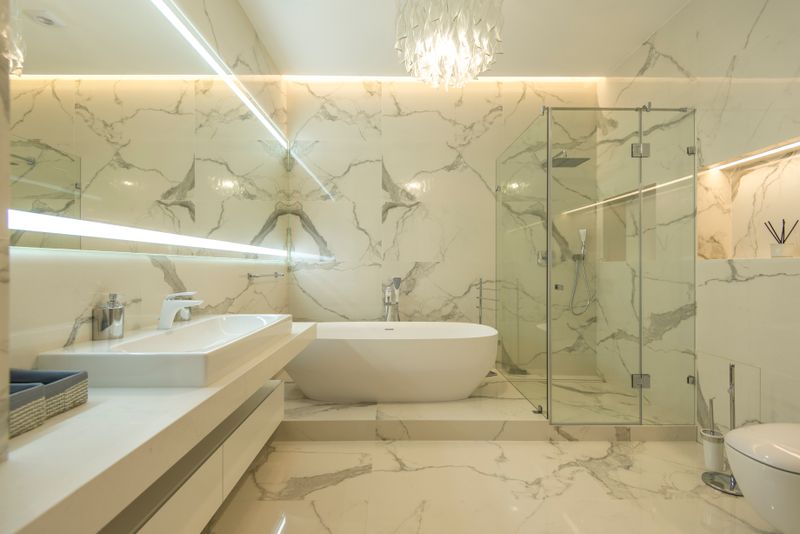
Tell us the size of your bathroom and the stone you have in mind. We will confirm the finish, the format, and the quantity with you before production starts.
— The Sino-Marble Team